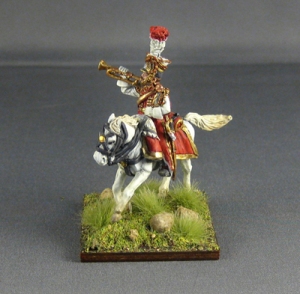
My Health, Painting, and Other News

•January 28, 2012 • 1 Comment

Me

I thought I would write an quick update to let everyone know what’s going on and what’s coming up.

Probably the biggest thing going on right now concerns my health. The short version is, I have a brain/pituitary gland tumor, it isn’t cancerous, but it is causing (or has caused) a whole lot of health issues. Doctors are still determining exactly how they are going to approach treating me, most likely starting with drug therapy, moving to radiotherapy if that isn’t successful, then onto surgery if need be. I’ll know for certain how they’ll start approaching it on Wednesday

I am certain the drug therapy will do the trick. Apparantly it usually does. But it could be a nasty couple weeks or so as things get going. And there are some other issues cause by or aggravated by all this, so the bottom line is, lots of trips to the hospital.  I am very fortunate though…as a veteran the Veterans Administration is taking care of me, and the doctors and staff at the VA hospital are simply fantastic. They really seem to be pulling out all the stops, and I truly think I’m getting the best care possible. I have no doubt this will all be fine in a couple months.

In the meantime, this is all probably going to put a big slowdown in my painting. But I still have a couple pokers in the fire. So I may have something done soon. Most of my painting focus this year will 28mm Napolionics, 28mm English Civil War, and a little dabbling in a couple other eras. I may also put everything on hold for a couple months and paint a 1500 point Flames of War company, just to get back into the game.

I am finished with painting for competitions for now. I guess I just burned out on spending 2 months of my painting time, twice a year, on one or two pieces that only win silvers (if I’m lucky), and never seem to get much game figures painted. Plus, I end up just feeling bad about my painting anyway. So my new rule is… paint for the games I want to play, if I happen to paint something I think is good, I’ll enter it in a competition…otherwise, I’ll skip it. I’ll most likely be doing just that for GhengisCon ’12… skipping the painting competition. Though I will be helping out judging an army painting competition at the Con. I’ll post pictures of that in February.

Other news, I’ve added a couple links this month, most importantly the one to the blog of my good friend Kris. His site is called Wargames and Railroads, which should give you a good indication what his interests are. Kris is a great painter, but he is also a brilliant painting teacher. Much of what I do i was taught by him, and he continues to be my go-to-guy if I need any sort of painting advice. Kris also organizes and runs many of the painting events at the conventions here in Denver as well as painting get togethers and workshops all over eastern Colorado. Definitely take the time to check out his blog.

That’s all for now. Thanks everyone for stopping by, and thank you for any comments you leave.

-Scott

“The Rainbow Hussar” by Alycia, Age 3 1/2

•January 9, 2012 • 4 Comments

My granddaughter and I had a splendid day hanging out at the “soldier store” and painting miniatures. This hussar is the first miniature she’s ever painted, and she is VERY proud of it. I promised I would take a photo and, of course, put the picture with all the other “soldier pictures” on the computer. So here is the “Rainbow Hussar”, painted and named by Alycia, age 3 1/2. :)

2011 in review

•January 1, 2012 • 1 Comment

Thank you all for making 2011 such a great year for my painting and this blog. Thanks for your visits and your comments.  I have lots of plans and ideas lined up for next  year, so keep checking back. See ya in 2012!

-Scott


The WordPress.com stats helper monkeys prepared a 2011 annual report for this blog.

Here’s an excerpt:

The concert hall at the Syndey Opera House holds 2,700 people. This blog was viewed about 45,000 times in 2011. If it were a concert at Sydney Opera House, it would take about 17 sold-out performances for that many people to see it.

Click here to see the complete report.

15mm Flames of War Herman Goering Division Troops

•December 15, 2011 • 3 Comments

The first platoon of what will eventually be a Flames of War Latewar (1944) Aufklarungschwadron  of the Herman Goering Division. These are all Battlefront Miniatures, 15mm.

General Francois Fournier

•October 30, 2011 • 6 Comments

Though things have been hectic the last month or so, I finally managed to get in a little painting time and finish something. This Front Rank 28mm miniature is painted as General Francois Fournier-Sarlovese, one of Napoleon’s best cavalry commanders, and the inspiration of the character Gabriel Féraud from the book and film The Duellists.

General Francois Fournier-Sarlovese

Click on images for larger photos

Fournier was probably the most daring, unruly, and unpredictable of Napoleon’s senior officers. Discipline appeared to be an anathema to him, and rules and indeed orders, were to be flouted or ignored, should he consider them unnecessary or troublesome. He  became a noted and feared duellist. He probably took even more delight in this pastime because he knew that Napoleon strongly disapproved and came down heavily on anyone caught duelling.

Fournier, by which he was known (Sarlovese was added to his name very much later), was born at the little town of Sarlat in the Dordogne, one of six children of Jean Fournier and his wife Marie-Anne Borne. Francois was the eldest and entered the world at the small inn owned by his parents called “le Tapis Vert” on 6 September 1773.

He was a clever, talented lad and possessed a fine singing voice for which he became noted in later life. He spent some years studying with the monks at Saint Gauden at the behest of the Bishop of Sarlat, Mgr de Pont de Albaret, who had recognised his classroom abilities.

Tired of studying, he craved excitement and enlisted in the Garde Constitutionelle du Roi. However, serving in a Royalist regiment in these turbulent times was a risk, and although he didn’t fear danger, he felt it an absolute waste to jeopardise his life for a cause he didn’t even believe in. He enlisted instead, as a Sous Lieutenant in the 9e Regiment des Dragons under their commander General Anne-Pierre Montesquiou-Fezensac.

Over the next 25 years he was to see a great deal of action, including battles at Chatillon, Montbello, Marengo, Loria, Gaete, Eylau, Friedland, la Coruna, Fuentes d’Onoro, Smolensk, Gross Beeren, Leipzig, and others.

While in Spain in May 1809, Fournier, with just three infantry battalions, two squadrons of hussars, and four guns, was charged with defending the small town of Lugo against any attack. Spanish General Nicolas Mahy approached the town on 18 May with an army said to number in excess of 15,000 men. Over the ensuing days, Mahy’s army mounted a number of attacks and repeatedly invited Fournier to surrender. The French General steadfastly refused although outnumbered by 10 to 1, and four days later, Mahy’s men abandoned their attempts having received word that Marshal Soult and his II Corps de l’Armee were approaching.

This was just one of the many acts of bravery displayed by Fournier right through his career.

One of his greatest friends was the incomparable General LaSalle, and before that officer’s marriage, the two got into many scrapes together in the pursuit of women and drinking exploits.

Although a brilliant commander, Fournier was often insubordinate and found himself in trouble on a number of occasions. He made a habit of being audaciously rude in the presence of the Emperor and found himself arrested and thrown into jail on more than one occasion.

At least one very senior soldier, le Marechal Michel Ney, disliked Fournier and regarded him as something of a bully, probably because of the way he went about provoking duels he knew he could not lose.

Among Fournier’s friends were a number of known anti-Bonapartist officers, including Generals Jean-Victor Moreau, Antoine Delmas, and the young 24 year old Gabriel Donnadieu who, like Fournier, also subsequently became a General.

The general had got himself into so many incidents incurring Napoleon’s wrath that the Emperor sent him into exile. However, the losses of senior commanders on the battlefields up to and including Wagram had been high. Gone were d’Espagne, Lannes, LaSalle, Bonnet d’Honnieres, Auguste de Colbert-Chabanais, Lochet, Desaix, Cervoni, Campana, Brun, de Billy, Boudet, and one of the Corbineau brothers and at least five more were prisoners in England: Carrie de Boissy, d’Henin, Lefebvre-Desnouettes, Exelmanns, and Lejeune. Napoleon was compelled to bring Fournier back into the fold.

He was a brave man and carried out many daring exploits, sometimes behind enemy lines. He was not showered with decorations and financial rewards as were many other senior officers, but he was made Baron and the Comte de l’Empire. In March 1819, the King wanted him to add Lugo to his name in recognition of his conduct in that town so many years before. Fournier however, preferred Sarlovese after a medieval hero of the Sarlat district.

He never did marry although he had many opportunities. Young Aspasie Vedrenne of a family who were close to the Fourniers wanted to marry him when she was 16 but he considered her no more than a child. However, she did inherit most of his estate when he died in 1827 at the age of 53.

Text from The Napoleon Series and Wikipedia

Dutch Blue Guard, Work in Progress

•October 30, 2011 • 4 Comments

These are a couple of figures from a small unit of Dutch Blue Guard, circa 1690 (War of the League of Augsburg), that I’m putting together. They aren’t based yet, and so far of the 19 figures total I need for the unit I only have about 5 done. But they are a joy to paint…Front Rank really outdid themselves on this line. As did Flags of War, who made the standards.

For the uniforms, I’ve seen a couple different variations. Some with orange cuffs and facings. I’m going with the plates in the book “Battle of the Boyne” by Osprey, which shows and describes the cuffs and facings as a more yellow color, with some details in orange In the end, it may be off, but I like the color scheme.

Edit- this is what I get for not paying attention…one flag is upside down HAHAH! Not only did I miss it when I attached the flag, but I missed it when I took the photo. Well, at least it’s a “work in progress”…

Painting Styles and Techniques

•September 27, 2011 • 9 Comments

I’ve been asked a few times lately to do tutorials on how I paint, and was even asked to join in on a class teaching. And sometime soon I may start doing that. But I thought it might be useful to first talk about painting style and techniques first. Well, at least my painting style and techniques. I really can’t speak for how anyone else goes about it.

This seems to fit the article's theme...plus I never did post this, so I may as well now :)

And the first thing that needs to be said is…there is no right or wrong way to go about painting a miniature, as long as you are pleased with the results. I know, I know… that sounds like a cop-out. But it’s true. Sure, you can paint for competitions and have your worked judged, but even competitions are subjective things, and much of what will win or lose is at the whim of judges who’s own styles of painting differ from place to place, and who’s own idea of what constitutes a “good” piece depends on many different factors. In the end, paint for yourself. And if you really are concerned with others liking your work, which is fine and quite expected, well,  I’ve found that if I paint something that I am happy with, and that I enjoy looking at, others do as well.

It’s also important to note that painting miniatures is, or at least should be, an evolutionary process. Over time, as you practice and talk to other painters and gamers and see other people’s work, the way you approach painting and the techniques you use will change. I look at miniatures I painted 3 years ago and I’m surprised at how different I would have painted them today.

Also I should mention, very little of my painting techniques are anything amazingly original. Pretty much everything I do I learned from someone else. And I still, honestly and truly, believe I have a long way to go until I will think of myself as a really good painter.

So, let’s talk about my painting “Style”. Or styles, I guess I should say. I think that, generally speaking, I have three ways I paint, depending on the miniature, if it’s an army, if it’s only for display, if it’s for competition, etc.

The first one would be Army Painter Style, or what my friends and I who are using it call the “Imrie Style”, after Saxon Dog David Imrie who first took the time to email me and show me how he did his amazing armies. This technique uses Army Painter Quickshade as the key element to painting and to the final look of the army. Though many of my friends use the colored primers that Army Painter makes, I generally stick to black primer for this. The figure’s colors are block painted in. Then lightly brush on Army Painter Strong Tone. No dipping, no letting huge pools of the stuff build up. After it’s dried, I give a quick dusting of matte varnish, and then start highlighting. And it’s the highlighting that makes all the difference. Because of the time saved shading, I take a little more time with the highlighting and picking out details, eyes being a biggie. I start with the base color I blocked in before the glaze, and then go lighter colors from there if need be. There is no fast rule on how much to highlight. I simply highlight until it looks right to me.

The whole point of this style, for me, is to get armies on the table that look good in a reasonable amount of time. Though not much shorter that other methods because of the highlighting, I really like the final look.

A number of my miniatures are painted in this style. Here are a few-

Prince Rupert's Regiment, Army Painter Style, with a simple 1 step highlight.

With some patience and time, Army Painter style can be taken much further.

These Army Painter style French curassier won a bronze medal in the GhengisCon '11 painting competition.

These Army Painter style French Curassier won a bronze medal at GhengisCon 2011.

The next way I paint is what I simply call a 3-Step Style. This is basic miniature painting 101. Start with a shade color, then paint a base color, leaving the shade showing in the deeper recesses, and then paint on a highlight color onto the highest areas. This is the way I first learned to paint, and is still the way I paint many, if not most, of my miniatures. I spend a little more time than just 3 layers of paint, usually. I may prime black, grey, or white.Generally black if it’s a unit. white if I want bright colors, grey if I want the colors to look just like they do in the bottle. I switch it around alot.

And it isn’t always 3 layers. Sometimes I go more. But generally, when I decide to paint something this way, i try to stick to plan. Again, the idea is to paint something that I think looks nice in a reasonable amount of time. To that end, I also sometimes use washes, GW’s Gryphone Sepia, Ogryn Flesh, Badab Black, and Devlan Mud being favorites. Though I used to alot, I generally don’t drybrush anymore. It almost always leaves my figures looking too grainy for my taste. I will still drybrush some, though, when painting this style…especially things like metallics or hair/fur. And I do usually spend more time on faces than 3-layers of paint.

Basically, I paint this way when I wand a cleaner, brighter looking miniature than I can get with Army Painter, and I really want to pay more attention to the details. Again, many of my miniatures are painted this way. Here are a few-

This figure of WIlliam III was done with a very simpe, fast 3 layer paint scheme on a white primer.

Elves in a 3 step style, with a little more time and attention spent on the banner.

A personal favorite, all painted in a simple 3-step style.

And then, finally, there’s what I call my Going All-Out Style. This is where I spend ridiculous amounts of time on layer after layer, blending down to shadows and blending up to highlights and trying to pick out every detail I can. This is also a “style” that I am nowhere close to being comfortable with, and generally fell like, the entire time I’m painting, that I have no idea what I’m doing. Everytime I spend this much effort on a miniature I’m reminded of how much further i have to go to get to a level I’ll really be happy with. Honestly, I probably never get that good. But that’s okay. I only spend this kind of time and effort on pieces for competitions or display, or the occasional army commander figure. I still have so much to learn, that I would never even venture to try and teach anything. I haven’t won a gold at a competition yet, but I’m still learning and trying. Maybe someday…

edit- “All-Out” doesn’t necessarily mean “better”. I could spend weeks on one figure, and then do the same figure again in a simpler style, and like it much more that way. It really is hit or miss sometimes.

These Zouaves took a silver at TactiCon '11.

I rebased this French Colonel and will use him as part of my "Waterloo" army. The horse didn't come out nearly as good as I would have liked.

Probably my favorite that I've painted, it won a silver at TactiCon '10 and is featured in Warhammer Historical's "Waterloo" rulebook.

Now, after categorizing all of that, the fist thing I have to admit is, it really isn’t that simple. Of course, nothing is. I may mix a little bit of everything in painting something, plus I have certain approaches to painting gold, for instance, that I use regardless of how I’m painting. But these kind of break down my painting into 3 broad categories, and it sort of helps me manage my time painting a little better if I can look at a group of miniatures and say “This is how I’m going to paint this today”.

-Scott

Work in Progress- French 7th Hussars for “Waterloo” Pt. 2

•September 27, 2011 • 1 Comment

So the two 7th Hussar figures dried overnight, and this evening I gave them a light coat of matte varnish and did some highlighting and adding in a few details.

The colors came out the way I hoped. Everything has a touch of a sepia tone to it, which is kind of the whole point of me using AP in the first place.

As far as the highlights go, I kept it simple. The whole point is to build an army, so I have to economize my time, which means I have to make myself stop painting at some point. With these two, I did 1 highlight, except for the red and green, which I did 2. The AP Strong Tone made a good shade for those colors.

I also added some more details, such as the eyes. Once everything is done and based, they’ll get a final spray of matte varnish to take off that last bit of sheen.

The Dark Tone worked great on the horses I think. The blacks could use more definition, but, again, I’m painting up a full unit of these…36 when it’s said and done. So it’s time to move on and start painting up the rest of the 12 figure squadron (I’m going to do 1 squadron at a time).

-Scott


Work in Progress- French 7th Hussars for “Waterloo”

•September 25, 2011 • 3 Comments

Back to working on my “Waterloo” units for awhile.I decided to switch it up a bit, and work on a squadron of the 7th Hussars. I started painting 2 as a color test. I wanted to use more “earth-tone” colors, and so went with a red-brown and an olive for the greens and reds. I think these colors will work very well with the AP glaze, and then I’ll highlight up to brighter tones.

I plan on modeling full squadrons from the “Waterloo” rules, which means a unit of 12 figures. I have enough hussars to do 3 full squadrons, and I’m trying to decide if I should do squadrons from different regiments or do the whole 7th Hussars. I’m leaning towards doing the full regiment…I think that would look pretty cool on the game table.

These two figures are my first experiment with Army Painter “Dark Tone”, and I have to say I REALLY like it. Ibrushed it onto the dark brown and black areas, and then used “Strong Tone” brushed onto everything else. The blacker “Dark Tone” really brings out the definition in the horse much better, and should make a really good base to highlight from.

-Scott


Edit- After taking another look at the photos I have to say-  Okay, forget the colors or the AP shades or whatever…the amazing thing is that I somehow managed to paint two number “7″s that look almost alike! That will probably never happen again haha!

Avalon Hill’s “War and Peace”

•September 18, 2011 • 1 Comment

When I was a kid, back in the 80′s, most wargaming that I knew of was done on hex maps with cardboard die-cut counters. And the first game I ever got as a kid, Avalon Hill’s “War and Peace”, was always my favorite.  It’s a multiplayer game that simulates the Napoleonic Wars on a grand strategic scale from 1805-1815, covering all the major and minor nations involved in conflict in Europe during that time.

 It’s been out of print for a couple decades now, but a few years ago, I came across a used copy of the game for cheap, so I went ahead and bought it, and after looking it over, put it up on a shelf. And there it stayed, until a couple weeks ago. That’s when I discovered that there is still a pretty active community of players and designers that have been updating the game. I found that there was actually a 4th edition set of rules, a beautiful new map, and even a company that is producing replacement and optional counters. So as part of a little birthday present for myself, I went ahead and had the map printed and laminated, and had a full color copy of the 4th edition rules color printed and bound.

And tonight, I went ahead and set up a scenario from the game, just to see how it looked and played. I haven’t played the game since probably 1986, but it was a great feeling to go through the book and put out all those cardboard counters again.

I set up for the “Austerlitz” scenario, which is pretty short, and played through a couple of turns to get the feel for the rules, and discovered that I really missed this type of gaming. It brought back alot of memories of getting together with friends for a game, often set up on the pool table in my grandmother’s house. It was a great feeling, and I hope to be able to get in a number of games with friends soon.

-Scott

Something a Little Different- Battles of Westeros

•September 11, 2011 • Leave a Comment

So I’ve been finding myself becoming more and more interested in boardgames…both the old Hex and Counter games from when I was a kid to some of the new games with the multitude of miniatures and cards and maps and tokens, etc.So for my birthday, I decided to treat myself with a copy of “Battles of Westeros”, from Fantasy Flight Games. My friend Nick, who owns the game, gave it a great recommendation, and I came across some really good reviews, so I figured why not.

This is a two player game recreating battles from George R.R. Martin’s “A Song of Ice and Fire” series.  These can be either battles directly from the books, or ones designed by the players. The game is played on a mapboard with miniatures representing the armies of the Starks and the Lannisters.

I haven’t read the rules yet, but the production values of the game are really fantastic. Beautiful gameboard, tokens, counters, and cards. And the army pieces  are very nice. They’re small, perhaps 15-18mm. But they’re nicely detailed. Though not needed, I will probably go ahead and paint them. I’ve seen some pictures of some pretty well done painted armies for this game.

I’ll post some more about the game once I’ve had a chance to play a couple games.


TactiCon ’11

•September 4, 2011 • 4 Comments

TactiCon ’11 is this weekend, one of the two large gaming conventions held here in Denver. Once again, I entered into the painting competition sponsored and judged by Colorado Miniature Painting Alliance. My entry was my Skirmishers in the Wilderness diorama-

And, once again, I came up short. Silver. I seem to have plateaued right about there, having won a silver in the last 4 conventions, but still finding a gold medal just out of reach. Important to note, though, that only 1 gold medal was awarded this time, and it was very well deserved.

-Scott

Edit- I think it’s time for me to start hanging out a little more with the folks at CMPA. These are really cool people, and include some of the best painters in the United States. And they enjoy talking techniques and tips. They have get togethers somewhere on the Front Range every week. I think it’s time to go start some learnin’!

Edit 2- Got some very interesting Reaper figures as prizes. Completely not my style, but they look like they’ll be a blast to paint. Keep an eye out for them. I should have a few photos (i was only taking pictures the last day) in a day or two.Mostly of the local game store booths and the painting room, and hopefully a decent one of Torin Reed’s gold medal winning entry.

English Civil War Royalist Armoured Cavalry

•August 28, 2011 • 2 Comments

My first unit of English Civil War Cavalry, a unit of pistol armed Royalist Armoured Cavalry. These were going to be the King’s Lifeguard of Horse, but I decided to do them as a more generic unit, and use them as part of a commissioned army I’m putting together for my friend Gary.

These are Warlord Games 28mm plastics, based for Field of Glory:Renaissance as “Cavalier Cavalry”. Not crazy about the miniatures, but they will do just fine for wargame figures. The cornet is from GMB Flags.


French General and ADC

•August 25, 2011 • Leave a Comment

A command stand consisting of a French Lieutenant General and an Aide de Camp, circa 1815.

I have a bunch of these single officer or aide figures from Perry Miniatures lying around, sort of the leftovers when I bought a pack of 3 or 6 miniatures just to get one specific one. So to put them to good use, I’ll start making command stands for my “Waterloo” armies from them. This is painted in what has become known in my gaming and painting group as the “Imrie Style”, using Army Painter as the shade step, followed by multiple highlights. Thanks to the Saxon Dog himself for teaching it to us. He’s much better at it…definitely check out his work on his website. Christopher at Bunker Hill is also doing some excellent work in this style, and I’ve learned quite a bit from his work as well.


Skirmishers in the Wilderness

•August 21, 2011 • 2 Comments

My latest diorama, depicting skirmishers of the 155th Pennsylvania Volunteer Infantry in 1864. The miniatures are 28mm Perry Miniatures plastic zouaves. I spent quite a bit of time working on this, and I’m pretty pleased with how it turned out. Probably my favorite, overall, of anything I’ve painted so far.

I entered it in the Steve Dean painting competition, and it made it into the semi-finals before being knocked out. I’ll see how it fares at TactiCon ’11 in a couple weeks.


Work in Progress- The King’s Lifeguard of Horse

•August 18, 2011 • Leave a Comment

Well, I think it’s going to be the King’s Lifeguard of Horse. It might bend up being something more generic as I do more research. I took a bit of liberty on some of the colors and gave the bunch a more uniform look than they probably had. But I’m doing at least 4 of these units for my Field of Glory: Renaissance, English Royalist Army, and I want to be able to tell at glance who they are. They are block painted and AP glazed…now a couple days drying time and on to highlighting.

-Scott

The Hobbyroom WIP

•August 17, 2011 • 2 Comments

I finally decided to take over my daughter’s old room and turn it into my hobby room/gameroom/den/guestroom. This where things are at the moment, though with the new IKEA having just opened up in town, I imagine it will look quite a bit different, with much more storage, in a few months. It will also double as the sleepover room when my granddaughter stays the night, and as a guestroom whenever family comes to visit. Until now my painting was done at the dining room table or my crowded computer desk in a corner of my room, so this is going to be very nice…

Henry Tillier’s Regiment of Foote

•August 14, 2011 • 3 Comments

Continuing on with my Royalist English Civil War army, this time with the green-uniformed Henry Tillier’s Regiment of Foote. These are Renegade Miniatures, 28mm, based for the game Field of Glory: Renaissance. The flag is from Flags of War.

The first game will be held over Labor Day weekend, so that gives me just a couple more weeks to have everything ready. The two hardest are now finished, Rupert’s and Tilliers. Now I need 4 units of cavalry, and that will bring me to the 400 points in units I need to play.

I mixed in the history of Henry Tillier and his regiment from Henry Tillier’s Regiment website, a reenactment group of The Sealed Knot .

Henry Tillier was from a French Huguenot family who were refugees from the persecution of the French Catholics. He became an officer in the army of Charles I that was raised to fight in Ireland in 1642. There he rose to the rank of Lt. Colonel in the regiment of Sir Fulk Huncks.

In 1643 he was promoted to Colonel and given his own regiment, raised from troops of the Dublin Garrison. With his regiment he crossed to Wales in 1644 and joined the King’s forces in the Shrewsbury Garrison. Soon after Prince Rupert began organizing his northern army, making Shrewsbury the rallying point for his troops and Tillier’s Regiment the nucleus of this new force. It was at this time the regiment was issued their distinctive green coats and standards.

In late February 1644, Prince Rupert set off from Chester, via Shrewsbury to break the Parliamentary siege of Newark. During the successful action of 21st March Henry Tillier was commander of foot, Rupert having promoted him to Sergeant Major General. The combined strength of Tillier’s and Broughton’s regiments was a thousand men. After some skilful manoeuvring Rupert relieved the Royalist garrison and by early April the regiment was back in Shrewsbury.

Tillier’s regiment were certainly part of the six thousand foot which left Shrewsbury on 16th May 1644. Marching with Prince Rupert to revive the flagging Royalist fortunes in Lancashire. On 25th May Bolton was stormed, the Royalist forces including Tillier’s claimed to have inflicted 1200 casualties and captured 600 Parliamentarians for the loss of 300 of their own men. The campaign was a great success and included the famous relief of Lathom house. The culmination of the campaign was the siege and capture of Liverpool on the 12th June 1644.


“If York be lost I shall esteem my crown little less…” Propelled by these words, contained in the now famous letter from Charles I, Rupert marched to the relief of York on 21st June 1644, taking Tillier’s and Broughton’s regiments with him. During the ensuing battle of Marston Moor, Tillier’s formed part of Lord Eythin’s Brigade, possibly providing some of the commanded shot despatched in support of the horse. Certainly Tillier’s fought with some distinction, “Newcastle’s whitecoats and a regiment of greencoats fought bravely, the whitecoats making an incredible last stand at White Syke close”.

Those men of Tillier’s who escaped death made their way back to Wales and were quartered at Welshpool. Henry Tillier himself was not with them, he had been captured on the field of Marston Moor.

Having recovered some of their strength, and now commanded by the Lt Colonel, Edmund Hammond, Tillier’s were part of the 2000 foot lead by Lord Byron to the relief of Montgomery Castle. In action on the 18th June against Brereton’s Parliamentarians, the regiment of a Colonel Ellis broke, taking the majority of the Royalist army with them. Those who escaped successfully were largely the veterans of Ireland. Tillier’s regiment were subsequently rallied and returned to Shrewsbury. Thus ended the 1644 campaign season, Tilliers must have been grateful for the chance to rest and recuperate.

The war restarted with a vengeance on 22nd February 1645. While Tillier’s regiment were on a foraging expedition the Shrewsbury garrison was surprised and captured by Colonel Thomas Mytton. Thirteen Irish troops were hanged the next day, only the English troops being allowed to march out. Chester was now the last major Royalist garrison in the North West and this is where the remnants of Tillier’s gathered.

Now, too depleted to form any reasonable strength, Tillier’s were combined with three other green coated regiments. Known collectively as the Shrewsbury foot and joined by their commander, Henry Tillier, freed from Leicester on 31st May 1645.

The 500 men of the Shrewsbury foot in conjunction with the 500 men of Rupert’s bluecoats formed Lisle’s tercio on the day of the battle of Naseby. After much fierce fighting the Shrewsbury foot collapsed only after a final charge by Thomas Fairfax. As the parliamentarians fought their way into the very heart of the formation Fairfax himself killed an ensign carrying a green Lt Colonel’s colour.

That was the end of Sergeant Major General Henry Tillier’s regiment of foote.

William III and a General

•August 14, 2011 • 4 Comments

So I had a urge, some time ago, to paint up some miniatures representing the armies at the Battle of the Boyne, fought  in 1690 between William III and James II. Something about this battle just struck me as interesting. Maybe it was because a Dutch Prince, William, was leading Dutch, Danish, Huguenot, and English troops against French, Irish, and some English troops under James II, fighting in Ireland to determine who would be the King of England. Fascinating stuff! So this is my start to that- King William III and one of his Generals. These are Front Rank Miniatures, 28mm-

William III-

General-

Coming soon for this army, the Dutch Blue Guard. This is all Iain at Flags of War‘s fault. Until I saw his fantastic Williamite Wars flags, I was pretty much oblivious to the whole period. After seeing them, I decided to get a book, which led to another book, which led to this new distraction :)


Cheers

-Scott

“Waterloo” Project pt. 3- Pierre David de Colbert

•August 3, 2011 • 5 Comments

All right, so this wasn’t actually supposed to be part of the “Waterloo” project. It’s a miniature that’s been sitting half-finished on a shelf for about 9 months that I decided to try out a few painting techniques on, specifically blending up from an Army Painter coat. I wanted to see if I could make individual figures that I’d be satisfied with using Army Painter glazing and highlighting. In the end, I really like the way this turned out, so I went ahead and based him the way I plan on basing all my independent officers for the game.

Then I went a little overboard on the basing and built a smashed fence for him to be jumping over.

And to top it all off, I doubt I’ll ever use the figure in the game, as I’m not planning on painting any French Guard Cavalry units.

But at least I finally finished that darned miniature that’s been sitting half- finished on my shelf for 9 months…

 
Follow

Get every new post delivered to your Inbox.

Join 191 other followers